Showing posts with label society. Show all posts

12/1/14

Is Makeup Body Negative?!

Hello my darlings!

As some of you may know, I, Gabby of Fudge Perfection, have a problem:
I am a makeup addict.

Now some people (cough, cough, Tumblr misandrists) like to believe that my addiction causes not only a serious dent in my wallet (because it does), but also a serious dent in my credibility.
As if loving makeup and also being body positive could not be true for a single person.
"Hypocrite", I was called. Fake. Liar.

56.63 billion dollars
That was the revenue for the cosmetic industry in 2013 in the US ALONE.
So clearly I am not the only human who uses cosmetics, and looking at those numbers, I statically cannot be the only body positive cosmetics user.

But more than that, I believe, hear me out, that not only is makeup not body negative, but in fact, it can be body positive! Here are my thoughts:

The Smudged Eyeliner Conundrum: 

Many of you will read the last sentence and scoff.
"Makeup is to conceal your flaws, not embrace them".

And perhaps you are right.
I had horrendous acne as a young teen, that's how I got into makeup in the first place, so I understand the conceal, hide, and never show your real face approach to beauty.
But consider this scenario:

A woman (or a man, because believe it or not, men compose a serious portion of the cosmetic profit) wakes up, feels like death, and slaps on some eyeliner to feel a little bit less like death.
Key word here: feel

Anyways, he/she goes to work, and chats up his/her hot coworker, working that charm because he/she feels sexy as all hell, knowing that his/her eyeliner is on fleek.
However, what he/she does not know is that during lunch, his/her eyeliner smudged like hell, and now he/she looks like Pete Wentz circa 2006 (children, google it).

But it doesn't matter you see, because the feeling of confidence, the feeling of beauty is vastly more important than the looking of beauty.
When you feel you look your best, whether you do or not, you accomplish more.
That's the beauty of the smudged eyeliner conundrum.

Self-Expression Eyeshadow

So the previous scenario covers many regular ole folks who use cosmetic products to feel better. YAY!
But some of us take it a step further.
Some of us use it not to feel more beautiful, to look like Megan Fox, no.
Some of us use it to feel more like ourselves.

And that "ourselves" can metamorphose in a variety of ways, depending on the day.

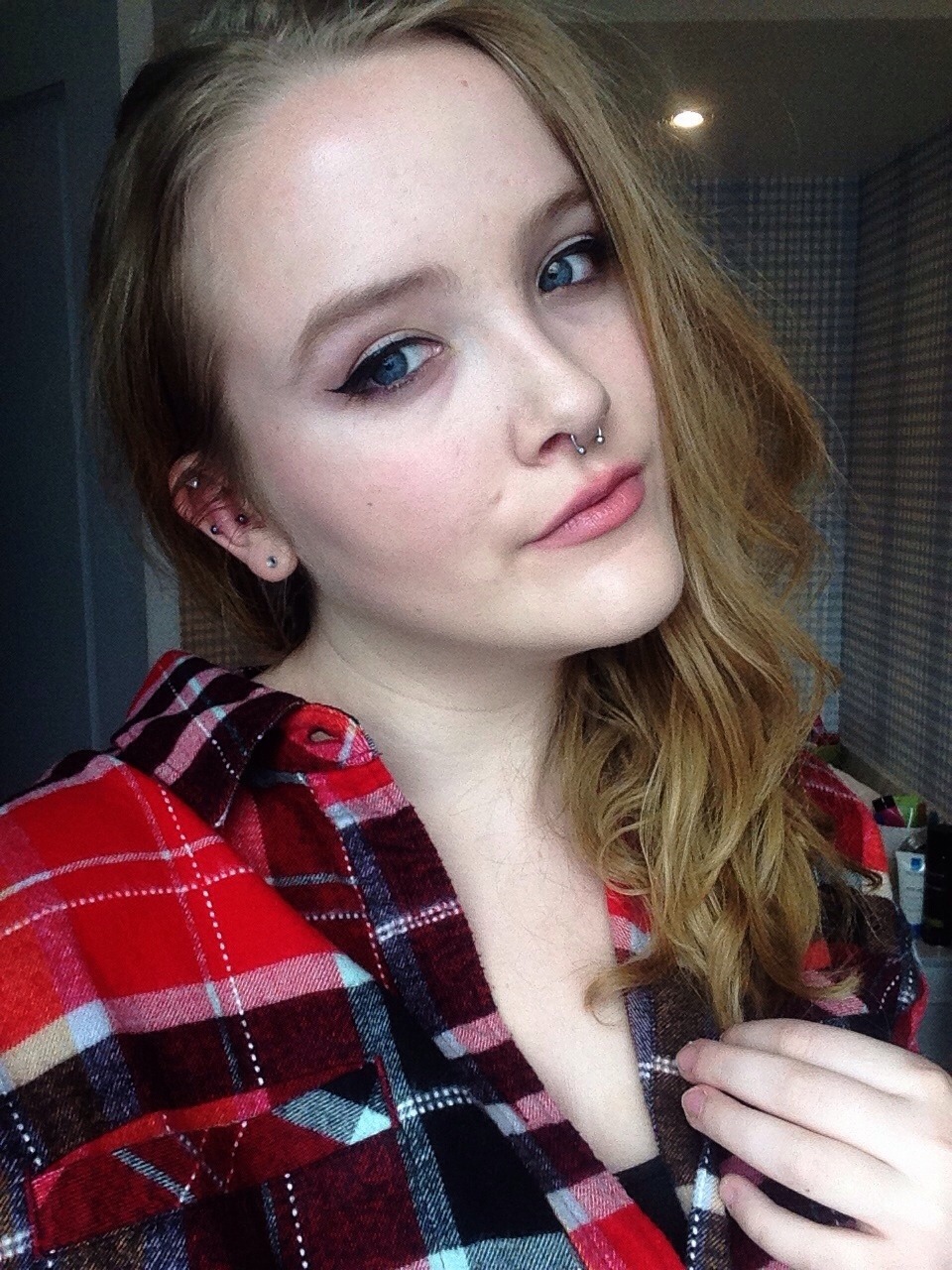
Some days I feel grungy, like Eddie Vedder's 1994 girlfriend (see the flannel).

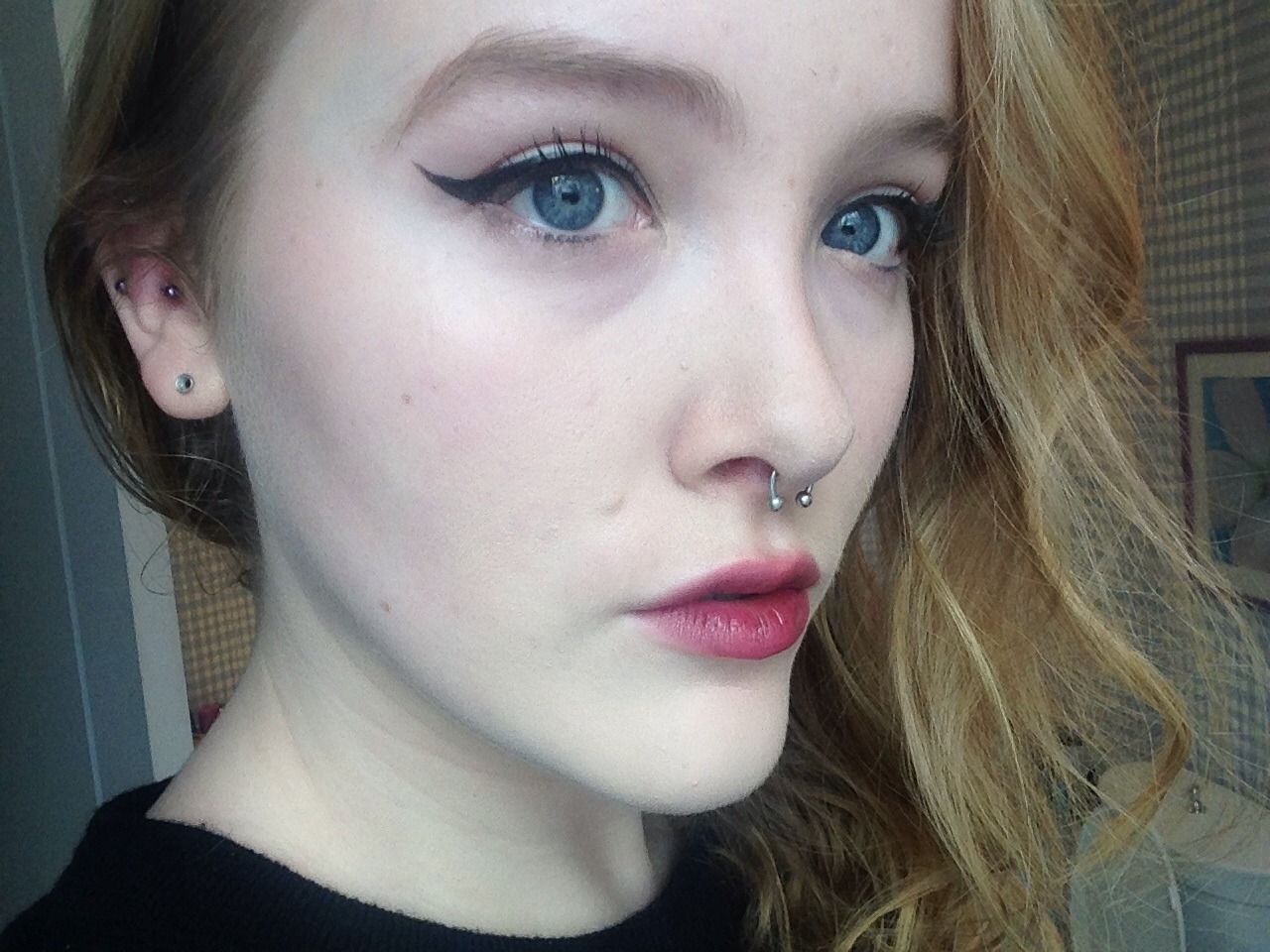
Others I feel like being a classic pin up beauty, a la Monroe (see that hella winged liner)

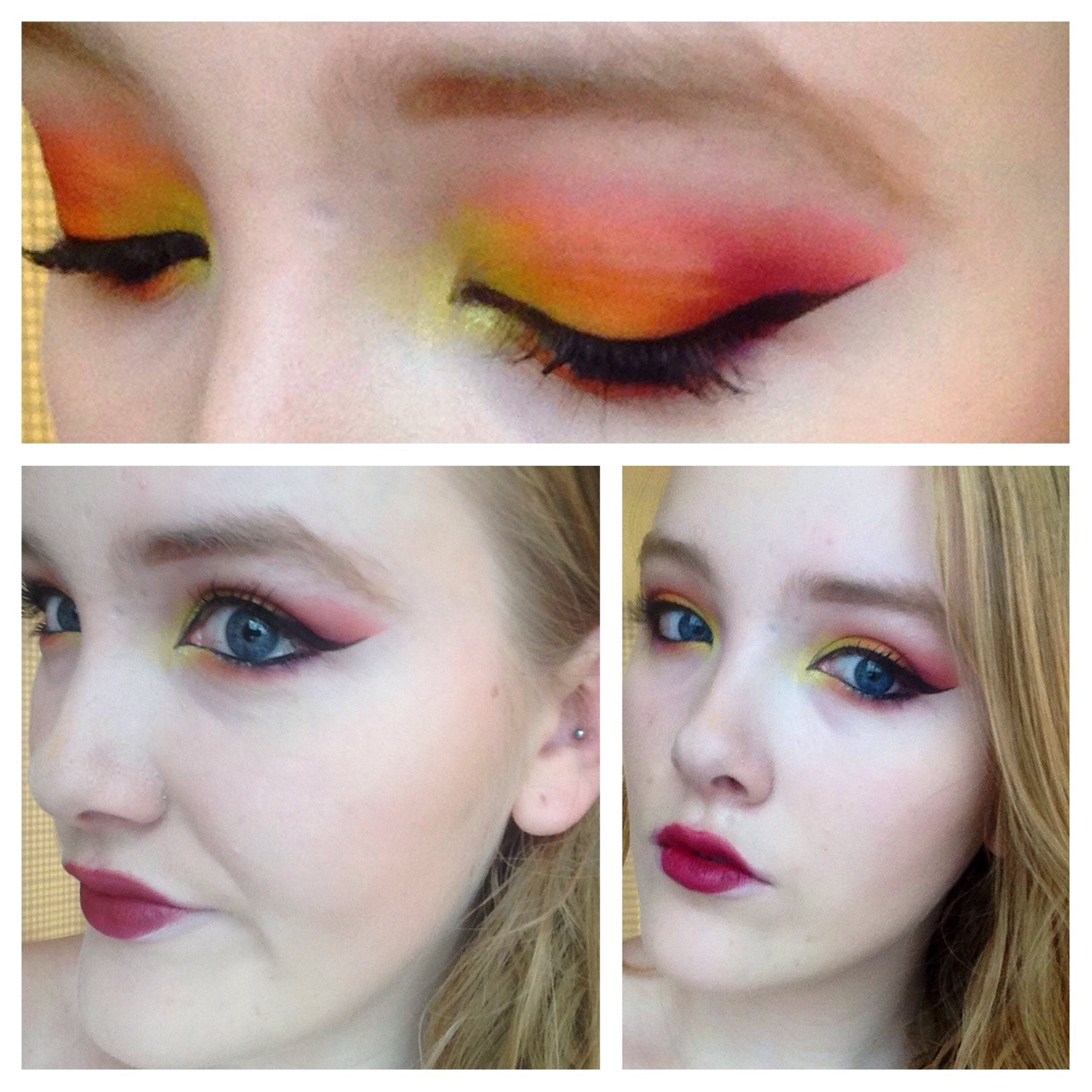
And some days I just want to slap everything on and be a colorful bird (see the sunset on my eyes).

For me, on those days, it's not about being the most beautiful.
It's about expressing myself in a creative way, the way painting or dancing helps others express themselves.

Yes, I try to have good lighting, and yes, I take about 18232932 selfies, but at the end of the day, it's not about me. It's about the art.

Powder to the People

Here is my final word on the subject.
I think makeup can be body negative if not used correctly.
But if someone can't leave the house without makeup, it really has nothing to do with the makeup, Rather it's a psychological issue the person (14 year old me) needs to work on.

But it can be body positive because it gives women the power to their own beauty.
Do they glam themselves up? Do they keep it natural?
The power to express themselves, to show the world who they are that day, it's up to them.
It's up to them, and a little bit of powder.

Oh, and by the way, women don't always wear makeup for men.
I rock false lashes alone in my dorm room and wear nothing when I go to the library during finals, surrounded by my male peers. Deal.

xoxo

Gabby


6/27/14

Collarbones: WTF

Good morning my beautiful fudgies:)

I should just stop going on Tumblr all together, shouldn't I?
Because it seems like every other week, I discover another unsettling body negative facet of this website that makes me want to throw a newborn out of a window, and every other week I write rant about it on the blog.

So I apologize in advance, but this is another fascinating edition of a recurring segment I'd like to call:
Tumblr: what. the. @#$%^& 
Apparently, the thigh gap has a hip, new cousin called the protruding collarbone. Yay!

Indeed, the new sign of ultimate beauty (or thinness, because really, isn't that the same thing?) is a defined clavicle. Its rise to fame is quite the typical Cinderella story: the clavicle used to be a body part no one paid attention to, until (most likely sometime during the 1990's heroin chic Kate Moss era) someone realized it was a classy way of ensuring that no matter what you are wearing, as long as your décolleté is exposed, everyone will know just how fabulously malnourished you look. It became the most prized possession in all of Hollywood, especially since the collarbone cannot (legally) be surgically enhanced. (the NY times explains all of its appeal here: http://www.nytimes.com/2007/05/10/fashion/10clavicle.html?_r=0.)

But in recent years, the razor sharp collarbone fad has grown exponentially, mostly amongst teenage girls. But why, you ask? Yeah, you probably guessed it.
Tumblr. 
Oh tumblr, with your pro-ana and thinspo blogs, altering the body image reality of millions, how I love and loathe you all at once.

Many of the reasons why I dislike this trend are the same as my hatred for the thigh gap, which you can read about here, but there is one other major reason I find this obsession ridiculous.

You can fake a protruding collarbone. 

Now I don't promote, agree with or condone the unhealthy fixation of any body part, but if for some odd reason you need to look like your clavicle could be used as a weapon, YOU DON'T NEED TO LOSE WEIGHT OR HARM YOURSELF IN ANY WAY.

The thing that makes the collarbone prominent is the shadows underneath and above the bone, making the hollows look deeper, and the light that reflects directly on the bone, making the bone appear raised.

Do you really think everyone you see in commercials, on the red carpet and on TV have these amazingly defined cheekbones, noses and clavicles? Think again.


You can do your own research on Youtube or other websites, but I hope this will pop in your head next time I tell you that the images you plaster on your walls or on your dashboard aren't always what they seem.


Have an amazing week, my lovelies.
xoxo

Gabby

6/4/14

Skinny Wrists, Skinny Hips: WTF

My beautiful fudgies,

Can I just ask the gods of thinspo where they come up with these ridiculous ideas?
Because it seems as though their nutrient-deprived following churns out these abhorrent goals every other day.

Today's pick? The motto "Skinny Wrists, Skinny Hips".
I'm 1000% serious, go on Tumblr and find it.
You know what, please don't. You might get sucked into the blackhole that is the thinspiration tag, and I would never forgive myself.

The meaning: If your hand can hold your opposite arm's wrists, and your fingers touch, wrapping themselves completely around your wrists, then you are adequately thin, hence the "skinny hips" add-on.

The logic: That's funny. There is none.

The ILLOGIC: 

1. Firstly, this mentality doesn't take into consideration the size of one's hands. I have dumpy, 3rd grader-sized fingers, so I can assure you, even if I lost 189 pounds, my hand could not wrap around my wrist.

2. Secondly, here is some basic human anatomy. Wrists? Bones. Hips? Bones. Booooooooooones. It's very simple: no matter how much weight you lose, your wrists and hips will not shrink. If you have unusually large wrists, the only way you can shave off some inches is to literally shave them off with a saw.
And I'd also like to ask in what scientific journal these young girls found the correlation between wrist and hip size, because as far as I'm concerned, skinny wrists equals genetics. Period.

3. Finally, but most importantly, this has nothing to do with wrists or hips. Girls and boys who suffer from extreme self-esteem problems will find flaws within themselves that don't exist, such as "fat wrists". Sure, I can come on here and rant about these weird obsessions, but that won't fix the problem.
There is no such thing as "skinny enough" for these sufferers, no matter how many times you tell them their hips are perfectly skinny enough.

All you can do is be there. Let them know, in person or even on their Tumblr ask, that you are there to listen. When they find the strength to admit their problem, then you can be of help. Because often times, these girls in their skinny wrists worlds suffer in skinny lips silence. Send them love, pray, and go on with your bad self:)

xoxo

Gabby

12/9/13

Why Is Pale Not Pretty? (Part 1: Wealth)

Hello my darling fudgies!
The pale versus tan debate is one I find absolutely fascinating. In fact, I found my research so compelling that I divided my article into 3 different parts! Here's part 1, hope you enjoy:)

"My god, you look pale!"
...what does this expression mean to you?

To most, it isn't meant as a compliment. "Pale" can be replaced with sick, tired, ghostly, on the verge of death, what have you.

To me, it's a comment I receive every other day, on account of my naturally translucent skin and lack of sunlight exposure.

But most importantly, it reflects the 21st century Occidental beauty ideal that is glowing, Mediterranean, tan skin. When did "tan" become the new spokesperson for health and beauty, and what does that mean for the rest of us anatomy doll lookalikes?

-------

Wealth is Beauty, Beauty is Wealth

The transition between pale love and pale loathe can actually be attributed to history, and industrial revolution. During the Victorian era, pale skin was all the rage. It was a time where the yeoman earned their living working outdoors as cultivators or animal breeders. Pale skin was therefore associated with the privilege not to have to labour outside in the sun, hence a pale complexion was a symbol of wealth. Women carried parasols everywhere, and hid themselves from the treacherous sun with gloves and hats. 

And then came along a little thing called the Industrial Revolution. Factory labour rendered farm labour scarcer, so much so that by the late 20th century, most of the Occidental world earned their living indoors. Furthermore, the increasing accessibility to education across the nations opened doors to millions of future lawyers, doctors, and other professionals. 

The indication of wealth now lied in one's ability to travel to exotic destinations, own a pool, play golf, tennis, or spend leisurely time outside; and what better way to show off your trip to the Caribbean than with a killer tan? 

This whole "wealth is beauty, beauty is wealth" mentality troubles me deeply. It reinforces 2 dangerous vicious cycles!
 
 Beauty is wealth? This ideology reaffirms the societal mentality that money is the end-all be-all of our time on this earth. There's a reason why the tanning industry is worth over 5 billion dollars: the last impression you want to give is one of poverty, which is synonymous with pale. 

Wealth is beauty? On a different note, this logic builds beauty up to be something more than it is. The pigment of your skin now means your status, your job, your friend circle, your savings account: no wonder we put so much pressure on ourselves to look a certain way! If beauty was represented just as it is, a simply characteristic of your being, not the entirety of your worth, we wouldn't be so critical of our bodies. 

-----------------------

Here' the end of part 1!
Stay tuned for part 2 my loves<3

xoxo

Gabby

9/29/13

The Danger of Thinspiration

Hello my loves!

As I might have mentioned before (in this article, or this one, it basically keeps me up at night), I have a hatred for thinspiration that cannot be appeased.

But how would you feel if you found out that your best friend, your daughter or your classmate spends hours pouring over what you thought were "harmless fashion blogs" but are in actuality thinsporation blogs?


Last month, Seventeen Magazine published an article that shined a well-needed light on what many are calling the dark side of Tumblr. Indeed, the thinspo epidemic (thinspiration i.e.: blogs that promote, encourage, and inspire thinness) can no longer be ignored, for its health and societal hazards are just too significant to overlook. Here is my detailed, researched account of this nasty Internet bug.


Bad, Bad Ideas

Think looking at a bunch of unreasonably thin women can't affect you or your peers? Think again.
In this study by Stanford Medical School ^2, a staggering 96.0% of the patients reported learning new weight loss or purging techniques. When it comes to their patients who were diagnosed with an eating disorder, pro–eating disorder site users did not differ from nonusers in health outcomes but reported spending less time on school or schoolwork and had a longer duration of illness. Similarly, a NCBI survey demonstrated that in girls, visiting pro-anorexia websites was associated with a higher drive for thinness, worse perception of appearance and more perfectionism ^3. 

It's Growing- Fast

The Internet is wonderful, but the ability to reach millions of people across the globe can be just as dangerous as it is helpful. A survey by Internet security firm Optenet found a 470% increase in pro-ana and pro-mia sites from 2006 to 2007, back in the day that the Myspace and Xanga platforms were at the peak of their popularity. However, Xanga, at the top of its game, in 2006, had 27 millions users; with the explosions of internet accessibility, that number seems minuscule, especially considering that Tumblr, as of August 8th 2013, has over 130.5 million blogs. There is a reason these blogs are becoming more and more menacing; they are spreading like a body negative wildfire. 


Dirty Little Secret

But you know your friends and family; they would never do that...or would they? In the same Stanford study, 52.8% of the 106 parents of patients diagnosed with an eating disorder did not know whether their child visited these sites, yet we know at least 35.5% of patients did. "Home" computers are becoming scarce, and smart phones, laptops and tablets are what most young adults use on a day to day basis to scour the internet. With no access to their browser history, the presence of wifi virtually everywhere and the easy,simple access to these potentially fatal websites, how can we keep tabs on those we love? Oh, and if you think the boys and men in your life are spared, I'd reconsider that thought. In the same NCBI survey, 5.9% of the 13, 15 and 17 year old boys had visited such websites. 

Several social media giants such as Facebook, Tumblr and Pinterest claim to seek out and regularly delete pro-ana related groups, blogs and pictures, but for various reasons, especially in Tumblr's case, this crackdown has been unsuccessful. 

What can these social media platforms do? 
What can we, as civilians, do to protect and inform the younger computer-using generation?

Until next time, my loves<3

xoxo

Gabby


1. (http://en.wikipedia.org/wiki/Pro-ana) 
2. http://pediatrics.aappublications.org/content/118/6/e1635
3. http://www.ncbi.nlm.nih.gov/pubmed/19142974

9/2/13

Is "Fat" an Insult?

Hello my beautiful fudgies:)


I recently watched a Laci Green video, link on your right or click right here, in which she discusses fat shame. One of the ideas she proposed to diminish or eradicate fat shaming is to simply call fat by its name: FAT. Not fluff, or pudge, or any other childish name to "soften" the blow of what society has made its most devious insult. Yes indeed, the way we avoid mentioning the word "fat" is oh-so telling about the way it is portrayed in the 21st century. So is fat an insult, but most importantly, SHOULD it be?
I dish out my personal opinion on the topic.


The Times, They Are A-Changing

As Laci mentions, the way we view fat as a society has not always been so negative. While it is true that throughout the Middle Ages the dominant Catholic church in Occident shunned gluttony, one of the 7 deadly sins, which can be associated with overeating, it's important to point out that finding enough to eat was still a daily struggle for most of the population. Appearing opulent was something only the privileged could afford, and it was regarded as noble, attractive, and, contrary to where we stand nowadays, healthy!

When crop growing and agriculture technology boomed during the Renaissance, the disparity in food supply between rich and poor slowly decreased, creating a shift in the "fat"mentality. It was no longer a sign of wealth, but of lack of self control. Of course, different societies, such as the Chinese Dynasties, have had a different evolution, but most share a fat-loving era in their history.

With the continuous transformation of "fat" and its implications throughout the ages, in the occidental society, as well as its various meanings across the globe , how can we collectively label the word as an insult? 


Warped Images

Ever since Antiquity, painters, sculptors, and artists alike have been slaving over the accuracy of their portrayal of the human body. The exact, realistic proportions were all the rage. So when did we get so accustomed to untruthful representations?
Well, many art historians would claim that many representations of power figures, such as royalty and political leaders, dating back many centuries ago, were embellished by the artist to please their boss.

However, the main perpetrators and arguably the most influential originators of the warped image era we currently live in are clothing brands.

Fuelled by the arrival of fashion magazines and catalogues in the late 19th century such as Vogue, these brands now had a platform for their ads, in which their models could look as beautiful and thin/curvy/flat/wide hipped as the period's beauty expectation required. Whether it was a specific instruction to their campaign artist who sketched the clothes by hand or a lengthy Photoshop transformation on the computer, their eye was and still is on the money, no matter what kind of societal consequences their ads may lead to.

We live in a time that fat just doesn't sell the way thin does. So if we choose to use "fat" as an insult, aren't we just perpetrating an idea we are being sold?

-----------------

Most importantly (again, as Laci said, but she's amazing i cannot HELP but paraphrase her every word!), fat shouldn't be an insult, because it isn't a trait that denotes any negative characteristics. 
It doesn't imply in its pure, unadulterated  mean, or stupid, or even lazy. It's just a loose connective tissue composed mostly of adipocytes (wikipedia knows what's up). 

Therefor no, my answer is it should not be an insult. So don't let it be one. 

have a fantastic week my loves!

xoxo

Gabby